
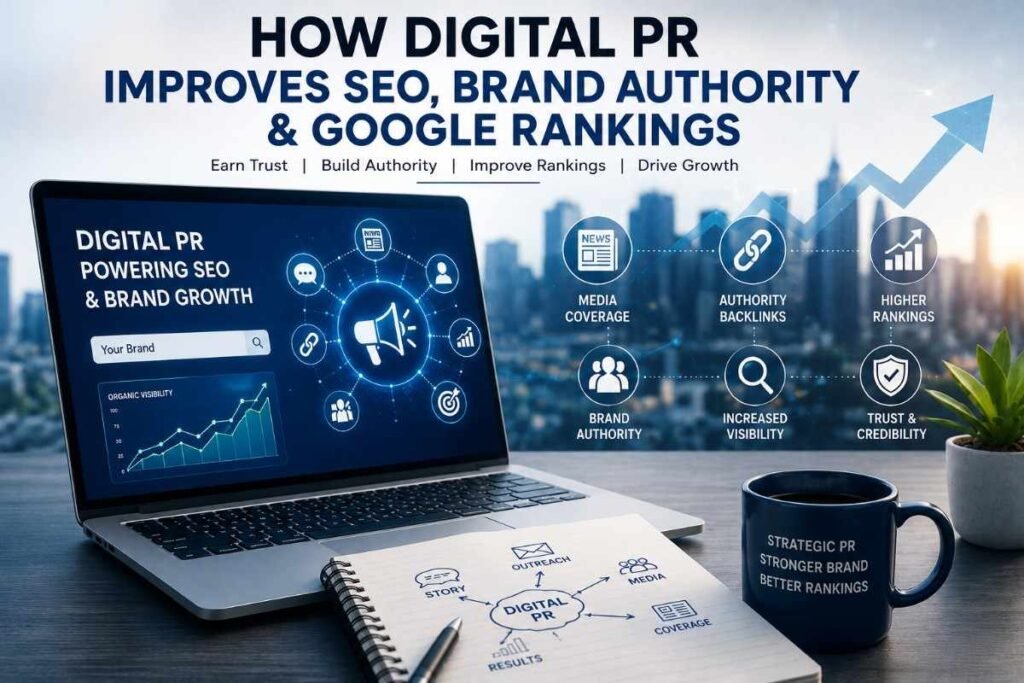
Search engine optimization has evolved dramatically over the last decade. A few years ago, many businesses focused heavily on keywords, technical optimizations, and acquiring as many backlinks as possible. While these elements remain important, Google’s ranking systems have become far more sophisticated.
Today, Google evaluates websites based on a broader combination of signals, including content quality, topical relevance, authority, trustworthiness, brand recognition, and overall user value.
This shift has changed how businesses approach SEO.
Rather than relying solely on traditional link-building tactics, forward-thinking brands are investing in Digital PR to build long-term authority, increase online visibility, and earn recognition from reputable publications.
Digital PR isn’t simply about generating publicity. It’s about creating genuine newsworthy stories, securing editorial media coverage, strengthening brand reputation, and helping businesses become recognized entities within their industries.
Whether you’re a startup seeking investor attention, a SaaS company expanding into new markets, an ecommerce brand launching products, or an established enterprise building thought leadership, Digital PR can support your broader marketing and communication goals.
One question we hear frequently is:
Does Digital PR actually improve SEO and Google rankings?
The short answer is Digital PR can positively support SEO by helping businesses earn authoritative media mentions, build brand recognition, strengthen E-E-A-T signals, and increase online visibility. However, no ethical agency should promise guaranteed rankings because Google’s algorithms evaluate many factors beyond PR.
In this guide, you’ll learn:
- What Digital PR is
- How it differs from traditional PR
- How Google evaluates website authority
- Why Digital PR has become an essential part of modern SEO
- How businesses can use Digital PR to strengthen long-term search visibility
By the end of this guide, you’ll understand why Digital PR is no longer just a branding activity—it has become an important component of sustainable organic growth. for more information press-release-distribution-cost.
What Is Digital PR?
Digital PR is a modern public relations strategy focused on increasing a brand’s online visibility through media coverage, editorial mentions, thought leadership, and strategic storytelling.
Unlike traditional PR, which primarily targets newspapers, television, magazines, and offline media, Digital PR focuses on digital publications where customers, journalists, and search engines discover information.
A successful Digital PR campaign may include:
- Press release distribution
- Media outreach
- Journalist relationships
- Founder branding
- Expert commentary
- Thought leadership articles
- Industry reports
- Data-driven stories
- Online reputation management
- Brand storytelling
The objective is not just publicity—it is to create meaningful visibility that supports both brand credibility and long-term digital growth.
Also Read: Organic Editorial Coverage with Author/Journalist Byline (Non-Disclaimer): The Complete Guide
Why Digital PR Matters More Than Ever
Consumers rarely make decisions based solely on advertising.
Before purchasing a product or contacting a service provider, many people search online to answer questions such as:
- Is this company credible?
- Have reputable publications covered them?
- Does the founder have industry expertise?
- What do others say about this business?
- Can I trust this brand?
Digital PR helps answer these questions through independent media coverage and authoritative online mentions.
When a respected publication features your company, it can strengthen public perception and increase confidence among customers, partners, investors, and other stakeholders.
Also read: How to Announce Startup Funding Through a Press Release: Complete Guide for Founders (2026)
Digital PR Is More Than Press Releases
Many businesses assume Digital PR simply means publishing a press release.
In reality, press releases are just one part of a broader communication strategy.
Digital PR also focuses on creating stories that journalists find genuinely valuable.
Examples include:
- Industry research
- Market insights
- Expert opinions
- Company milestones
- Product innovation
- Customer success stories
- Funding announcements
- Social impact initiatives
- Leadership interviews
- Trend analysis
These stories can generate editorial interest and help position a business as a knowledgeable voice within its industry.
Also Read :Why Credibility Is the New Currency: How Organic PR Helps Professionals Stand Out
Traditional PR vs Digital PR
Although both disciplines aim to improve public perception, their methods and outcomes differ.
| Traditional PR | Digital PR |
|---|---|
| Print newspapers | Online publications |
| Television | Digital media |
| Radio | Industry blogs |
| Offline reputation | Online authority |
| Brand awareness | Brand awareness + search visibility |
| Press conferences | Digital storytelling |
| Traditional journalists | Journalists, bloggers, creators, digital publishers |
Digital PR aligns more closely with how modern audiences consume information and how search engines understand brand authority.
Also Read:ANI vs PTI Press Release Distribution: Which Is Better for Your Brand in 2026?
Why SEO and Digital PR Are Closely Connected
SEO and Digital PR often work toward the same long-term objective:
Helping people discover trustworthy businesses online.
SEO focuses on improving a website’s visibility in search results through high-quality content, technical optimization, and relevance.
Digital PR focuses on increasing a brand’s visibility through credible media coverage, expert positioning, and industry recognition.
When these efforts work together, they can reinforce each other.
For example:
- High-quality content gives journalists useful resources to reference.
- Media coverage can introduce new audiences to your brand.
- Brand recognition may increase branded search demand.
- Thought leadership can strengthen industry credibility.
- Editorial mentions may naturally lead to valuable backlinks.
Rather than treating SEO and PR as separate disciplines, many organizations now integrate them into a unified digital growth strategy.
Also Read: 10 Factors to Consider When Choosing a Press Release Distribution Agency
How Google Evaluates Website Authority
Google has repeatedly explained that there is no single “authority score” used for rankings.
Instead, its systems evaluate numerous signals to understand whether content is helpful, relevant, and trustworthy.
Some of these signals include:
also read : What Is Digital PR? Everything You Need to Know About Digital Press Release Distribution
Content Quality
Google aims to reward content that demonstrates genuine expertise, answers user questions clearly, and provides original value.
Businesses that consistently publish helpful content are more likely to build long-term credibility.
Relevance
Search engines evaluate whether content closely matches a user’s search intent.
A highly relevant page is generally more useful than one that simply repeats keywords.
Reputation
Google encourages site owners to build positive reputations beyond their own websites.
Independent mentions from reputable sources can help users evaluate the credibility of a business.
Expertise
Content created by people with real industry knowledge often provides greater value than generic or promotional material.
Digital PR helps businesses showcase their expertise through interviews, commentary, research, and media features.
Trust
Users want confidence that the information they find is accurate and reliable.
Transparent communication, professional branding, and credible third-party recognition all contribute to building trust over time.
The Relationship Between Digital PR and SEO
Digital PR does not replace SEO.
Instead, it strengthens several elements that contribute to long-term search performance.
1. Increased Brand Visibility
Media coverage introduces your business to audiences who may never have discovered your website through search alone.
Greater visibility can lead to increased awareness and more branded searches over time.
2. Editorial Mentions
Journalists often reference companies they consider credible or newsworthy.
These editorial mentions can reinforce your reputation across the web.
3. Authority Backlinks
Some media coverage includes links back to your website.
When earned naturally through relevant editorial content, these backlinks can support your broader SEO strategy.
The emphasis should always be on quality and relevance, not quantity.
4. Stronger Brand Signals
Businesses frequently mentioned across trusted websites may become more recognizable to both users and search engines.
Brand recognition often grows through consistent communication rather than isolated campaigns.
5. Better Content Distribution
Creating excellent content is important.
Ensuring the right people discover it is equally important.
Digital PR helps distribute valuable content through media channels, increasing its potential reach.
Why Brand Authority Matters
People naturally trust businesses they recognize.
When potential customers repeatedly encounter your company through:
- Industry publications
- Business news websites
- Expert interviews
- Research reports
- Thought leadership content
your brand becomes more familiar and credible.
Brand authority isn’t built overnight.
It develops through consistent communication, meaningful expertise, and valuable contributions to your industry.
also read : Best Press Release Distribution Services in India
Digital PR Helps Build E-E-A-T
Google’s Search Quality Rater Guidelines emphasize the importance of:
- Experience
- Expertise
- Authoritativeness
- Trustworthiness
While these guidelines are not ranking factors themselves, they reflect the qualities Google aims to reward in helpful content.
Digital PR supports these principles by helping businesses demonstrate:
also read : What Is Digital PR? The Complete Guide for Modern Businesses
Experience
Sharing real customer success stories, product launches, or industry projects.
also read : Digital PR vs Traditional PR: Which Delivers Better ROI
Expertise
Providing expert commentary, educational content, and thought leadership.
Authoritativeness
Earning recognition from respected publications and industry communities.
Trustworthiness
Maintaining transparent communication and building a consistent online reputation.
Common Misconceptions About Digital PR
Let’s address a few myths.
also read : How Digital PR Improves SEO, Brand Authority & Google Rankings
Myth 1: Digital PR Is Just Link Building
Reality:
While backlinks can be a valuable outcome of Digital PR, the broader objective is to build credibility, visibility, and brand authority.
Myth 2: Every Press Release Improves SEO
Reality:
Publishing low-value or purely promotional press releases is unlikely to create meaningful long-term value.
Newsworthy stories and genuine editorial interest matter far more.
Myth 3: Digital PR Guarantees Google Rankings
Reality:
No ethical PR or SEO agency can guarantee specific rankings.
Digital PR supports many signals associated with long-term organic growth, but rankings depend on numerous factors, including content quality, technical SEO, user experience, and competition.
Why Businesses Are Investing More in Digital PR
As search becomes increasingly competitive, businesses are recognizing that sustainable growth requires more than keywords alone.
Digital PR helps organizations:
- Build trust
- Increase online visibility
- Strengthen brand recognition
- Share meaningful stories
- Support SEO through ethical practices
- Improve long-term discoverability
Instead of chasing short-term tactics, Digital PR focuses on creating lasting value for both audiences and search engines.
Ready to Strengthen Your Online Authority?
Whether you’re launching a startup, scaling a SaaS company, expanding an ecommerce business, or building a corporate brand, Digital PR can help amplify your expertise and increase your visibility across trusted media channels.
At DigitalPressRelease.in, we develop Digital PR strategies tailored to your business goals, industry, and target audience—helping you communicate the right story to the right people.
CTA: Book a free Digital PR strategy consultation and discover how a customized PR approach can support your long-term brand authority and search visibility.hat Digital PR is, how it differs from traditional PR, and why it has become an essential component of modern SEO.
Now let’s answer one of the big
How Media Coverage Supports SEO
When people think about SEO, they often think only about keywords or backlinks.
However, Google’s systems evaluate websites using many different quality signals.
Media coverage contributes to several of these indirectly.
Professional Digital PR helps businesses increase:
- Brand visibility
- Industry recognition
- Trust
- Reputation
- Topical authority
- Brand searches
- Referral traffic
- Editorial mentions
These elements work together to strengthen a website’s overall online presence.
Why Google Pays Attention to Trusted Sources
Google’s mission is to organize trustworthy information.
Although Google doesn’t publicly state that media mentions automatically improve rankings, reputable publications often demonstrate characteristics Google values:
- Editorial oversight
- Fact checking
- Original reporting
- Industry expertise
- Established reputation
When respected publications discuss your business, they help users discover your brand in credible environments.
This contributes to stronger brand recognition and can support long-term visibility.
Authority Backlinks Explained
One of the most discussed benefits of Digital PR is earning authority backlinks.
But what exactly are they?
An authority backlink is a link from a reputable, editorially trusted website pointing to your content.
Examples include:
- Business publications
- Industry magazines
- Technology news sites
- Government resources
- Educational institutions
- Well-established online media
These links are fundamentally different from links placed on low-quality directories or link farms.
The emphasis should always be on earning links naturally through valuable stories rather than acquiring them artificially.
Why Quality Matters More Than Quantity
Years ago, SEO often rewarded websites with large numbers of backlinks.
Today, quality is significantly more important than volume.
Consider these two scenarios:
Website A
- 500 links from unrelated, low-quality websites
- Little editorial oversight
- Minimal traffic
- Generic content
Website B
- 8 editorial mentions from respected industry publications
- Relevant audience
- Strong editorial standards
- High credibility
In many cases, the second scenario provides greater long-term value because the links are earned through genuine editorial interest rather than manufactured solely for SEO purposes.
How Authority Backlinks Benefit Businesses
High-quality editorial backlinks may contribute to:
- Increased referral traffic
- Better brand recognition
- Greater online credibility
- Improved discoverability
- Enhanced content distribution
- Stronger relationships with industry publications
Rather than viewing backlinks as isolated ranking signals, businesses should see them as by-products of effective communication and valuable content.
Brand Mentions vs Editorial Backlinks
A common misconception is that every media mention must include a backlink.
In reality, even unlinked brand mentions can have value.
Let’s compare the two.
| Brand Mentions | Editorial Backlinks |
|---|---|
| Business name is mentioned | Business name + clickable link |
| Builds recognition | Builds recognition + referral opportunities |
| Supports reputation | Supports reputation and navigation |
| May increase branded searches | May increase branded searches and direct traffic |
| Often appears in interviews or news stories | Usually appears in feature articles or resource references |
Both can contribute to stronger brand awareness, even though backlinks often receive more attention within SEO discussions.
Digital PR vs Traditional Link Building
Many businesses still think link building means manually requesting links from websites.
Modern Digital PR takes a very different approach.
| Traditional Link Building | Digital PR |
|---|---|
| Outreach focused primarily on links | Outreach focused on stories |
| Often transactional | Editorial and relationship-driven |
| May target any website | Targets relevant publications |
| Link-first mindset | Audience-first mindset |
| SEO-focused | Brand + SEO + Reputation |
The strongest Digital PR campaigns earn links naturally because the content is genuinely useful or newsworthy.
Digital PR vs Guest Posting
Guest posting remains a legitimate marketing tactic when used ethically.
However, it serves a different purpose.
| Guest Posting | Digital PR |
|---|---|
| Publish content on another website | Earn editorial media coverage |
| Often contributor-driven | Journalist or editor-driven |
| Primarily educational | Newsworthy and authoritative |
| Limited audience | Broader media exposure |
| Usually one publication | Multiple potential publications |
Guest posting builds relationships with individual websites.
Digital PR builds relationships with the media ecosystem.
Digital PR vs Traditional PR
Although they share similar foundations, their objectives have evolved.
| Traditional PR | Digital PR |
|---|---|
| Newspapers | Online publications |
| Television | Digital media |
| Offline reputation | Online visibility |
| Public awareness | Brand authority |
| Press conferences | Digital storytelling |
| Print coverage | Search-friendly media presence |
Today’s businesses often combine both approaches for maximum impact.
Digital PR vs Paid Advertising
Paid advertising delivers immediate visibility, while Digital PR focuses on long-term authority.
| Paid Advertising | Digital PR |
|---|---|
| Immediate traffic | Long-term visibility |
| Budget-dependent | Asset-driven |
| Stops when budget ends | Coverage may continue generating value |
| Sponsored placement | Earned media |
| Promotional | Editorial credibility |
Many successful brands use both paid media and Digital PR together rather than treating them as competing strategies.
Why Journalists Matter in Digital PR
Journalists play an essential role in helping valuable stories reach wider audiences.
Unlike advertisers, journalists evaluate whether a story is genuinely relevant to their readers.
Businesses that consistently provide:
- Useful insights
- Original research
- Industry expertise
- Customer success stories
- Market commentary
are more likely to develop productive media relationships over time.
This is why Digital PR places significant emphasis on storytelling rather than promotion.
Why Google Values Earned Media
Google encourages website owners to build content that people genuinely want to reference.
Earned media aligns with this philosophy because coverage is based on editorial judgment rather than direct payment for placement.
Although Google does not guarantee ranking benefits from media coverage, earned editorial recognition often reflects qualities associated with helpful, trustworthy information.
Examples include:
- Original insights
- Expert commentary
- Industry relevance
- Public interest
- High editorial standards
Digital PR and Google’s Helpful Content System
Google’s Helpful Content System is designed to reward content created primarily for people rather than search engines.
Digital PR naturally complements this approach because effective campaigns begin with stories that are genuinely useful or interesting.
Examples include:
- Industry research
- Market trends
- Customer case studies
- Educational resources
- Original data
- Product innovation
- Social impact initiatives
Instead of creating content solely to acquire links, Digital PR encourages businesses to create resources worth discussing.
Digital PR Supports Google’s E-E-A-T Principles
Digital PR also helps reinforce the qualities reflected in Google’s E-E-A-T framework.
Sharing real business achievements demonstrates practical knowledge.
Experience
Examples include:
- Product launches
- Business milestones
- Customer success stories
- Industry events
Expertise
Media interviews, educational articles, and professional commentary help demonstrate subject matter expertise.
Authoritativeness
Regular appearances in respected publications contribute to broader industry recognition.
Trustworthiness
Transparent communication and consistent messaging strengthen public confidence over time.
Digital PR and Topical Authority
Topical authority refers to becoming widely recognized as a trusted source within a specific subject area.
For example:
A cybersecurity company consistently publishes:
- Threat research
- Expert interviews
- Industry reports
- Conference insights
- Security best practices
Over time, both users and media begin recognizing that company as an authority in cybersecurity.
Digital PR helps amplify this expertise through broader media visibility.
How Brand Searches Support Long-Term Growth
One overlooked benefit of Digital PR is increased branded search demand.
Imagine a startup featured in multiple respected technology publications.
Potential customers may later search for:
- Company name
- Founder name
- Product name
These branded searches indicate growing awareness and familiarity.
While Google does not treat branded searches as a direct ranking factor, increasing brand recognition often supports stronger long-term marketing performance.
How Digital PR Supports Entity Recognition
Google increasingly aims to understand entities—people, organizations, products, and concepts—rather than just matching keywords.
Consistent, accurate mentions across reputable sources help reinforce a business’s identity and relationships within its industry.
Examples include:
- Founder interviews
- Business profiles
- Conference participation
- Research publications
- Award announcements
- Media features
Over time, these references contribute to a richer online presence.
Digital PR and AI Search
Search is evolving rapidly.
AI-powered search experiences increasingly rely on authoritative, trustworthy sources when generating responses.
Businesses with:
- Strong media presence
- Recognized expertise
- Credible citations
- Helpful educational content
are generally better positioned to be discovered across emerging search experiences, including AI-assisted search interfaces.
Rather than optimizing only for traditional search rankings, Digital PR helps businesses build the broader reputation that modern search ecosystems increasingly value.
Why Consistency Matters
One successful campaign is valuable.
Consistent communication is far more powerful.
Businesses that regularly share meaningful stories build stronger relationships with:
- Journalists
- Customers
- Industry peers
- Partners
- Investors
Digital PR for Startups: Building Trust Before Brand Recognition
Startups often face a common challenge—they have innovative ideas but limited public recognition.
Potential customers, investors, journalists, and partners may hesitate to engage with a company they have never heard of. Digital PR helps bridge this credibility gap by introducing startups through authentic stories rather than promotional messaging.
Instead of simply announcing a new product, startups can use Digital PR to highlight:
- Funding announcements
- Founder journeys
- Product innovations
- Customer success stories
- Market research
- Strategic partnerships
- Expansion plans
- Industry insights
When these stories appear in respected online publications, startups begin building recognition that supports marketing, investor relations, and long-term business growth.
For early-stage companies, Digital PR is often one of the most effective ways to establish credibility before becoming a widely recognized brand.
How SaaS Companies Benefit from Digital PR
Software companies operate in highly competitive markets where buyers research extensively before making purchasing decisions.
Prospective customers compare features, read reviews, search for expert opinions, and evaluate industry credibility.
Digital PR helps SaaS companies demonstrate expertise by sharing:
- Product launches
- Feature updates
- Industry reports
- Customer success stories
- Technology trends
- Founder interviews
- Security insights
- Market analysis
These assets not only increase visibility but also position the company as a knowledgeable contributor within its niche.
For SaaS businesses focused on recurring revenue, trust is often just as important as product functionality.
Why Ecommerce Brands Should Invest in Digital PR
Ecommerce businesses frequently rely on paid advertising for customer acquisition.
While advertising can generate immediate traffic, Digital PR helps create long-term visibility that continues beyond individual campaigns.
Examples include:
- Product launch announcements
- Seasonal buying guides
- Consumer trend reports
- Sustainability initiatives
- Founder interviews
- Customer experience stories
- Industry commentary
These campaigns increase awareness while strengthening the brand’s reputation across multiple digital channels.
For ecommerce companies, Digital PR complements SEO by expanding visibility beyond traditional product pages.
Digital PR for Local SEO
Many businesses assume Digital PR only benefits national brands.
In reality, local businesses can also benefit significantly.
Examples include:
- Restaurant openings
- Hospital expansions
- Educational initiatives
- Community programs
- Local business awards
- Charity partnerships
- Regional events
Coverage in trusted regional publications increases local awareness while supporting broader online visibility.
For businesses targeting customers within specific cities or regions, local Digital PR can become an important part of their marketing strategy.
How Digital PR Supports Long-Term Brand Authority
Brand authority develops gradually through consistent communication.
When businesses repeatedly appear in:
- Industry publications
- Business news websites
- Expert interviews
- Podcasts
- Research reports
- Conference coverage
they become more recognizable within their industries.
Authority is earned over time through expertise rather than advertising.
The stronger a company’s reputation becomes, the easier it is for customers, journalists, and partners to trust its expertise.
Measuring the ROI of Digital PR
Unlike paid advertising, Digital PR isn’t measured solely by immediate conversions.
Instead, organizations evaluate multiple performance indicators.
Common metrics include:
- Media placements
- Brand mentions
- Referral traffic
- Branded search growth
- Organic traffic trends
- Share of voice
- Social engagement
- Media inquiries
- Partnership opportunities
- Lead quality
Rather than focusing on a single metric, businesses should evaluate how Digital PR contributes to broader marketing and business objectives over time.
Key Metrics to Track
A successful Digital PR campaign should be evaluated using meaningful performance indicators.
| Metric | Why It Matters |
|---|---|
| Media Coverage | Measures visibility across trusted publications |
| Referral Traffic | Shows visitors arriving from media websites |
| Branded Searches | Indicates growing brand awareness |
| Authority Backlinks | Reflects editorial recognition |
| Organic Traffic | Measures long-term search growth |
| Engagement | Demonstrates audience interest |
| Lead Quality | Indicates relevance of campaign reach |
| Share of Voice | Compares visibility against competitors |
Tracking these metrics consistently provides a clearer picture of campaign effectiveness than focusing on media placements alone.
Common Mistakes Businesses Make with Digital PR
Many organizations invest in Digital PR without a clear strategy.
The most common mistakes include:
Treating Every Announcement as News
Not every company update deserves media attention.
Journalists are interested in stories that offer value to their readers, not promotional advertisements.
Businesses should focus on genuine newsworthiness rather than frequent announcements.
Chasing Backlinks Instead of Building Relationships
Businesses sometimes approach Digital PR purely as a link-building exercise.
The strongest campaigns prioritize:
- Storytelling
- Industry expertise
- Media relationships
- Audience value
Editorial backlinks become a natural outcome rather than the sole objective.
Expecting Immediate SEO Results
Digital PR contributes to long-term visibility.
Like brand building, results often accumulate over time rather than appearing immediately after a campaign.
Organizations that consistently invest in Digital PR generally build stronger authority than those running isolated campaigns.
Ignoring Content Quality
Poorly written press releases rarely generate meaningful media interest.
Professional storytelling remains one of the most valuable investments in Digital PR.
Great stories outperform promotional language almost every time.
A Step-by-Step Digital PR Strategy
Businesses planning their first Digital PR campaign can follow this structured approach.
Step 1: Define Business Goals
Determine what you want to achieve.
Examples include:
- Brand awareness
- Product launch
- Investor visibility
- Thought leadership
- Website traffic
- Reputation building
A clear objective shapes every other decision.
Step 2: Identify Your Audience
Understand who should see your story.
Possible audiences include:
- Customers
- Journalists
- Investors
- Industry professionals
- Business partners
- Local communities
Knowing your audience improves media selection and messaging.
Step 3: Develop a Newsworthy Story
Ask yourself:
- Why should people care?
- What makes this different?
- What problem does this solve?
- Is there supporting data?
- Can experts contribute insights?
Strong stories earn attention because they provide genuine value.
Step 4: Create High-Quality Content
Prepare assets such as:
- Press releases
- Founder quotes
- Supporting statistics
- Images
- Case studies
- Research summaries
Well-prepared content increases the likelihood of editorial interest.
Step 5: Identify Relevant Media
Instead of contacting every publication, focus on those most relevant to your audience and industry.
Quality always outweighs quantity.
Step 6: Execute Outreach
Professional outreach includes:
- Personalized journalist communication
- Timely follow-ups
- Clear story angles
- Supporting resources
Relationship building remains central to successful Digital PR.
Step 7: Measure Results
Review campaign performance using:
- Media coverage
- Referral traffic
- Brand mentions
- Search visibility
- Audience engagement
- Business inquiries
Use these insights to refine future campaigns.
Real-World Business Examples
Startup Funding Announcement
A technology startup announces its first investment round.
Instead of focusing solely on funding figures, the campaign highlights the business problem being solved, market opportunity, founder vision, and customer impact.
The result is broader media interest than a purely financial announcement.
SaaS Product Launch
A software company introduces an AI-powered feature.
Rather than publishing only a product update, the campaign includes expert commentary, customer use cases, and industry trends.
This positions the company as a technology leader rather than simply a software vendor.
Healthcare Innovation
A healthcare organization launches a new diagnostic solution.
Digital PR emphasizes patient outcomes, research collaboration, and healthcare accessibility, creating a stronger narrative for industry publications.
Ecommerce Expansion
An ecommerce company expands into international markets.
Instead of announcing expansion alone, the campaign explores changing consumer behavior, logistics innovation, and future growth opportunities.
This broader perspective increases editorial relevance.
Why Businesses Choose DigitalPressRelease.in
Digital PR succeeds when strategy, storytelling, and media expertise work together.
At DigitalPressRelease.in, we help businesses move beyond one-time announcements by creating communication strategies aligned with long-term brand growth.
Our approach includes:
- Strategic Digital PR planning
- Media outreach
- Press release distribution
- Founder branding
- Online reputation management
- Industry-specific PR campaigns
- Brand authority building
- Long-term media relationships
Whether you’re a startup seeking recognition or an enterprise strengthening market leadership, our goal is to help your brand earn meaningful visibility through credible media coverage.
Ready to Strengthen Your Brand Authority?
Every successful Digital PR campaign begins with a clear strategy.
If you’re looking to improve your online visibility, strengthen your reputation, and support your long-term SEO efforts, our team can help you develop a Digital PR strategy tailored to your business goals.
Request a Free Digital PR Strategy Session and discover how DigitalPressRelease.in can help your brand build lasting authority through ethical, results-focused Digital PR.
How Digital PR Improves SEO, Brand Authority & Google Rankings
Frequently Asked Questions (FAQ)
The following FAQs are written in a format suitable for FAQ Schema markup and target Google’s People Also Ask (PAA) section.
What is Digital PR?
Digital PR is a modern public relations strategy focused on increasing a brand’s online visibility through media coverage, online publications, journalist outreach, thought leadership, and strategic storytelling. Unlike traditional PR, Digital PR also supports search visibility, brand authority, and long-term digital growth.
How does Digital PR improve SEO?
Digital PR supports SEO by helping businesses earn editorial media coverage, high-quality backlinks, brand mentions, referral traffic, and increased brand recognition. These activities strengthen a website’s overall online authority and complement technical SEO and content marketing efforts.
Does Digital PR directly improve Google rankings?
Digital PR does not directly influence Google’s ranking algorithms or guarantee higher rankings. However, it can contribute to stronger authority, trust, media visibility, branded search demand, and editorial backlinks, all of which may support long-term organic search performance.
What is the difference between Digital PR and SEO?
SEO focuses on improving a website’s visibility in search engines through technical optimization, content, and user experience.
Digital PR focuses on building brand authority through media coverage, journalist relationships, and online reputation.
Together, they create a stronger long-term digital marketing strategy.
Is Digital PR better than traditional link building?
Digital PR focuses on earning links naturally through valuable stories and media relationships, whereas traditional link building often focuses primarily on acquiring backlinks.
Digital PR typically delivers broader business value by improving credibility, visibility, and brand awareness in addition to supporting SEO.
What are authority backlinks?
Authority backlinks are editorial links from trusted, reputable websites such as established news publications, industry journals, educational institutions, and recognized organizations.
These links generally provide greater value than large numbers of low-quality links because they are earned through genuine editorial recognition.
Can press releases improve SEO?
Press releases can support SEO when they communicate genuinely newsworthy information and contribute to broader Digital PR efforts.
Simply distributing promotional press releases without meaningful news value is unlikely to produce lasting SEO benefits.
Why are brand mentions important?
Even when they don’t include hyperlinks, brand mentions can increase awareness, strengthen reputation, and encourage branded searches.
Consistent mentions across reputable publications help businesses build stronger online credibility.
What industries benefit most from Digital PR?
Digital PR can benefit nearly every industry, including:
- SaaS
- Startups
- Ecommerce
- Healthcare
- Education
- Finance
- Hospitality
- Manufacturing
- NGOs
- Professional Services
- Corporate Enterprises
Every industry has stories worth sharing when positioned strategically.
Is Digital PR suitable for startups?
Absolutely.
Digital PR helps startups establish credibility, attract investors, generate media attention, build founder authority, and increase awareness before becoming widely recognized brands.
How long does Digital PR take to produce results?
Digital PR is generally a long-term strategy.
While some campaigns generate immediate media coverage, building brand authority, trust, and sustained visibility typically requires consistent effort over time.
How is Digital PR different from advertising?
Advertising places paid promotional messages before audiences.
Digital PR focuses on earning editorial coverage through valuable stories, expert insights, and genuine newsworthiness.
Earned media often carries greater credibility because it is independently published rather than purchased.
Does Digital PR help Local SEO?
Yes.
Local Digital PR can improve regional visibility by generating coverage in city-based publications, local business news, community websites, and regional industry media.
This supports broader local brand awareness.
How do journalists influence SEO?
Journalists help amplify valuable stories to larger audiences.
When businesses consistently provide useful information, research, or expert commentary, journalists may feature those stories in editorial content, increasing visibility and credibility.
What makes a Digital PR campaign successful?
Successful campaigns typically include:
- A clear objective
- Newsworthy content
- Professional storytelling
- Relevant media targeting
- Consistent outreach
- Quality reporting
- Long-term relationship building
The strongest campaigns prioritize audience value over promotional messaging.
How do I choose the right Digital PR agency?
Look for an agency that offers:
- Industry expertise
- Transparent communication
- Strategic planning
- Relevant media relationships
- Ethical outreach
- Reporting and measurement
- Long-term partnership support
Choose a partner that understands your business goals—not just one that promises the largest number of media placements.
Final Buying Guide
Investing in Digital PR is about building long-term authority—not simply generating short-term publicity.
Before choosing a Digital PR agency, ask yourself these questions.
What are my business goals?
Do you want to:
- Improve Google visibility?
- Build brand authority?
- Launch a new product?
- Attract investors?
- Generate qualified leads?
- Strengthen your reputation?
Your objectives should determine your PR strategy.
Who is my target audience?
Consider who needs to discover your business.
Examples include:
- Customers
- Journalists
- Investors
- Business partners
- Industry leaders
- Local communities
The more clearly you define your audience, the more effective your campaign can become.
Does the agency understand my industry?
Every industry communicates differently.
Healthcare, SaaS, ecommerce, finance, education, hospitality, and manufacturing each require different storytelling approaches and media strategies.
Industry knowledge often improves campaign relevance and outcomes.
Is the strategy focused on long-term authority?
An effective Digital PR campaign should help build:
- Trust
- Brand recognition
- Industry credibility
- Media relationships
- Search visibility
- Thought leadership
Long-term authority generally creates more sustainable value than short-term publicity alone.
Can the agency support future growth?
As your business evolves, your communication needs will also change.
Choose a partner capable of supporting:
- Founder branding
- Media outreach
- Press release distribution
- Online reputation management
- Corporate communications
- Industry-specific PR campaigns
A long-term relationship often delivers greater strategic value than isolated campaigns.
Why Businesses Choose DigitalPressRelease.in
Digital PR is no longer just about distributing stories—it is about building brands that people trust.
At DigitalPressRelease.in, we combine strategic storytelling, media outreach, press release distribution, and digital reputation management to help businesses strengthen their online authority.
Our Digital PR services include:
- Digital PR Campaign Strategy
- Press Release Distribution
- Media Outreach
- Founder Branding
- Corporate PR
- Industry-Specific PR Campaigns
- Online Reputation Management
- Brand Positioning
- Media Coverage Planning
Whether you’re a startup launching your first product or an enterprise strengthening market leadership, our focus is on creating communication strategies that support sustainable business growth.
Ready to Build Your Brand Authority?
Strong brands are not built through advertising alone.
They are built through trust, expertise, visibility, and meaningful stories.
If you’re looking to improve your online presence, strengthen your reputation, and support your long-term SEO strategy, our Digital PR specialists are ready to help.
Request Your Free Digital PR Strategy Consultation
Let’s discuss your business goals, evaluate your current online authority, and create a customized Digital PR roadmap designed to improve visibility, credibility, and long-term organic growth.
Contact DigitalPressRelease.in today and start building a brand.
Featured Snippet Opportunities
What Is Digital PR?
Digital PR is an online public relations strategy that helps businesses increase brand visibility through media coverage, journalist outreach, editorial mentions, and thought leadership while supporting long-term SEO and brand authority.
How Does Digital PR Improve SEO?
Digital PR improves SEO by increasing brand visibility, earning editorial backlinks, generating media mentions, strengthening trust, and supporting long-term search authority through credible online recognition.
Digital PR vs Link Building
Traditional link building focuses primarily on acquiring backlinks, while Digital PR focuses on earning editorial coverage, building brand authority, and creating meaningful relationships with journalists and industry publications.
People Also Ask (PAA)
- What is Digital PR in SEO?
- Does Digital PR help Google rankings?
- Is Digital PR better than link building?
- How does media coverage improve SEO?
- What are authority backlinks?
- Can press releases improve SEO?
- Why are brand mentions important?
- How do journalists help SEO?
- Is Digital PR suitable for startups?
- How do I measure Digital PR success?
- Does Digital PR help Local SEO?
- How long does Digital PR take?
- What is earned media?
- What is the difference between PR and Digital PR?
- How do I choose a Digital PR agency?
Suggested Internal Links
Link naturally to relevant service pages across DigitalPressRelease.in, including:
- Digital PR Services
- Press Release Distribution
- Startup PR Agency
- Founder Branding
- Media Outreach Services
- Media Coverage Services
- Online Reputation Management (ORM)
- Corporate PR
- Industry-Specific PR Campaigns
- About Us
- Contact Us
- Blog
- Case Studies (when available)
Suggested External References
To strengthen E-E-A-T and provide readers with authoritative resources, consider referencing:
- Google Search Central (Search Essentials, Helpful Content, E-E-A-T guidance)
- Google Search Quality Rater Guidelines
- Google AI Overview documentation
- Public Relations Society of America (PRSA)
- International Public Relations Association (IPRA)
- Reuters Handbook of Journalism
- Associated Press Stylebook
- HubSpot Marketing Blog
- Moz Learning Center
- Search Engine Journal
AI Image Prompts
1. Digital PR Ecosystem
A modern digital marketing command center with journalists, news websites, authority backlinks, Google search results, brand mentions, SEO analytics dashboards, and media coverage flowing into a growing business website. Clean blue and white corporate style, isometric infographic design, ultra-realistic, 16:9, high resolution.
2. Digital PR Driving SEO Growth
A business website climbing Google’s search rankings through editorial media coverage, trusted news publications, authority backlinks, branded search growth, and AI-powered search visibility. Modern futuristic illustration with professional corporate colors.
3. Brand Authority Journey
A visual timeline showing a startup evolving into an industry leader through Digital PR, featuring founder interviews, news articles, media logos, customer trust, and increasing Google visibility. Flat vector infographic with premium business style.
4. Journalist Outreach Workflow
A professional PR specialist pitching a story to journalists, leading to online media coverage, editorial backlinks, increased website traffic, and improved search authority. Modern office environment, realistic lighting, high-detail business illustration.
5. SEO + Digital PR Integration
An advanced infographic combining SEO, Digital PR, E-E-A-T, authority backlinks, media mentions, Google AI Overviews, Knowledge Graph, and brand authority into one interconnected growth ecosystem. Minimalist, premium corporate design, suitable as a blog hero image.
Infographic Ideas
Infographic 1: How Digital PR Improves SEO
Flow:
Digital PR Strategy → Newsworthy Story → Journalist Outreach → Media Coverage → Editorial Mentions → Brand Authority → Organic Search Growth
Infographic 2: Digital PR vs Traditional Link Building
Compare:
- Purpose
- Strategy
- Results
- Trust
- Long-Term Value
- SEO Benefits
- Brand Impact
Infographic 3: Digital PR Growth Framework
Visual pyramid:
- Great Content
- Thought Leadership
- Media Outreach
- Editorial Coverage
- Authority Backlinks
- Brand Recognition
- Sustainable Organic Growth
LinkedIn Post
SEO isn’t just about keywords anymore. It’s about becoming a brand that Google and your audience trust.
Digital PR has evolved into one of the most effective long-term strategies for improving online authority, earning editorial backlinks, strengthening E-E-A-T, and increasing brand visibility.
In our latest comprehensive guide, you’ll learn:
- How Digital PR supports SEO
- Why earned media matters
- The role of authority backlinks
- Digital PR vs link building
- Digital PR vs paid advertising
- Practical strategies for startups, SaaS companies, ecommerce brands, and enterprises
If you’re investing in long-term organic growth, this guide is worth reading.
Social Media Caption
Want better Google visibility without relying only on traditional link building?
Discover how Digital PR helps businesses earn trust, media coverage, authority backlinks, and long-term search visibility.
Read our complete guide and learn why Digital PR has become one of the smartest investments for sustainable SEO growth.
#DigitalPR #SEO #BrandAuthority #GoogleRankings #MediaCoverage #LinkBuilding #MarketingStrategy #BusinessGrowth
Email Newsletter Summary
Subject: Why Digital PR Is Becoming Essential for Modern SEO
Search engines reward brands that demonstrate trust, authority, and expertise—not just optimized websites.
Our latest guide explains how Digital PR supports SEO through editorial media coverage, authority backlinks, brand mentions, E-E-A-T, and long-term reputation building.
Whether you’re a startup, SaaS company, ecommerce brand, or enterprise, you’ll discover practical strategies to strengthen your online authority and improve your digital presence.
Read the complete guide and learn how Digital PR can become one of your strongest long-term growth investments.
Strong Lead Generation CTA
Turn Your Brand Into an Authority That Google and Customers Trust
Getting noticed online is no longer just about ranking for keywords—it’s about becoming a trusted voice in your industry. A strategic Digital PR campaign can help you earn credible media coverage, strengthen brand authority, and support sustainable organic growth.
Whether you’re launching a startup, scaling a SaaS company, growing an ecommerce brand, or expanding an enterprise, DigitalPressRelease.in can help you create a customized Digital PR strategy aligned with your business goals.
Book a Free Digital PR Strategy Consultation today and discover how ethical, results-driven Digital PR can strengthen your online visibility, enhance your reputation, and support long-term SEO success.